
Key Takeaways
- Pick the one customer question your business hears most, and write the answer you actually give — including the conditions that matter
- Paste that rough answer into ChatGPT, Claude, or Gemini so it becomes a short reply your team can save and reuse
- The prompt should make your wording consistent. It should not invent prices, timelines, policies, or promises you didn't provide
- Read the result before you save it, and fix anything inaccurate or anything you wouldn't actually say
- Put the approved version where your team already looks: phone notes, a shared document, email templates, or your messaging tool
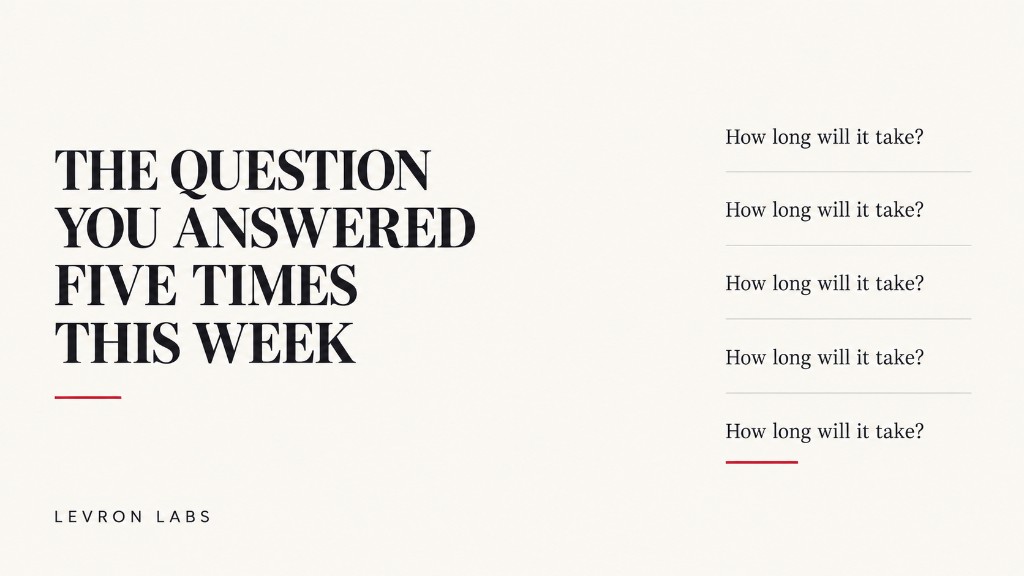
Someone calls, walks up to the counter, or messages your business on Facebook and asks a question you've answered hundreds of times.
"How long will this take?" "Do you take my insurance?" "What does the warranty cover?"
You know the answer. But when you're handling three other things, you type it from memory again. The next person on your team gives a slightly different version. The customer gets an answer, but your business has to rebuild it every time.
Pick the question you hear most
Just one. Write down the answer you normally give, including any conditions that matter. It can be messy.
Then paste this into ChatGPT, Claude, Gemini, or the AI tool you already use:
Copy everything below this line
A customer often asks us:

"[Paste the question, without their name or personal details]"

Here is the answer we actually give:

"[Write your rough answer. Include the facts, conditions, and next step.]"

Turn my answer into a reply my team can save and reuse.

- Answer the customer's question first.
- Use three sentences or fewer.
- Sound plain and friendly, like a person at our business.
- Keep every condition that matters.
- Do not add prices, timelines, policies, or promises I didn't provide.

Then write a shorter version for a text message.
Leave out the customer's name, address, account number, or anything else that identifies them. The question is fine. The person is not.
What a finished reply looks like
Say you remodel kitchens and customers often ask how long a project will take. Your rough answer might be: "We need to know what's changing before we can give a timeline. Moving walls or plumbing makes a difference. Send us a few photos and we'll talk through the scope."
AI can clean that up into a reply your team can use:
The timeline depends on what you're changing, especially whether the layout or plumbing will move. If you send us a few photos and tell us what you have in mind, we can talk through the scope and give you a more useful estimate.
That's the job for AI here: make your answer easier to say consistently. It shouldn't decide your timeline, insurance coverage, diagnostic fee, or warranty terms for you.
It can clean up your answer. It cannot write your policy.
Read the result before saving it. Fix anything inaccurate, or anything you wouldn't actually say. If a price, a timeline, or a condition showed up that you didn't provide, take it out. Same boundary as what AI is actually bad at: use it where you can check the output.
Put it where your team already looks
Put the approved version where your team already looks for quick answers: phone notes, a shared document, email templates, or your messaging tool. Update it when your terms change.
Two minutes spent on one repeated question can save the next person from writing it again from scratch. Once that answer is working, do the next one.
This is the same habit as the five prompts for the work that waits until Friday and photographing notes instead of retyping them. One small system, used on the question you already know by heart.
— Aristotle Taylor, CEO & Co-Founder, Levron Labs
What to do this week
Pick the question you answered from memory most often. Write your rough version, run the prompt, and save the reply you would actually send.
If the real problem is that the same answers live in five people's heads and nowhere else, start with a free ops assessment. We'll map which replies should be a saved answer, and which ones still need a person.