
Key Takeaways
- Most viral AI prompts are three years old — today's models can think through a real operational problem with you if you set them up right
- This prompt audits one process: maps how it works today, what a system could handle, what needs a human, and where you're losing time or money
- Two rules make it useful: do not flatter, and recommend only one change — not a mountain of work
- A yes-man audit is worse than no audit; forcing pushback is what makes the answer worth reading
- Fix one thing, let it run, then move to the next — that is how AI actually compounds in an operation
A prompt that audits one part of your business. It won't flatter you.
Paste it in, answer honestly, and it hands you the one fix worth making first.
Most AI prompts you see floating around are three years old. "Write me an email, but ask questions first." That was clever in 2023. Today's models can do far more than write — they can actually think through a problem with you, if you set them up right.
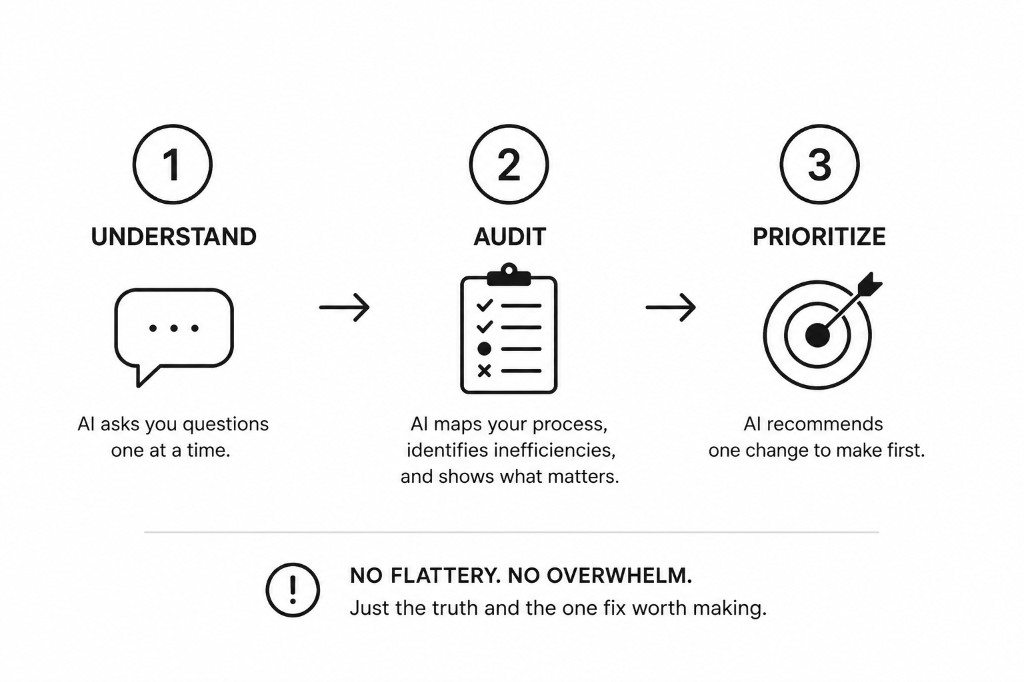
So here's a real one. It takes a single process in your business — how you handle a new lead, how you quote a job, how you deal with a complaint, your pick — and walks you through a genuine audit of it. It asks you questions, then hands back a clear breakdown of what's working, what's wasting your time, and the one thing worth fixing first.
Two things built into it on purpose: it's told not to flatter you, and it's told not to hand you a mountain of work. Paste it into ChatGPT, Claude, or Gemini exactly as written.
The prompt — copy everything below this line
I want you to act as a sharp, experienced operations consultant auditing one process in my business. Be direct and honest. Do not flatter me or tell me my process is great to make me feel good. If something is inefficient, redundant, or a bad idea, say so plainly and explain why. Your job is to be useful, not agreeable.

The process I want to audit is: [describe one process - for example, "how a new lead goes from first contact to booked appointment"].

Step 1: Ask me questions one at a time until you fully understand how this process actually works today, including who does what, what tools are involved, and where things slow down or get dropped. Do not move on until you have a real picture.

Step 2: Once you understand it, give me:
- A plain map of the process as it works now
- The steps that are repetitive enough that a system could handle them
- The steps that genuinely need a human and should stay that way
- Where I am most likely losing time or money right now

Step 3: Recommend ONE change to make first. Just one. It should be the highest-leverage fix that is also realistic to actually finish. Do not give me a long roadmap or tell me to overhaul everything. Explain why that one thing comes first and what a reasonable first step looks like.
Swap the bracketed part for whatever process you want to look at. Everything else stays exactly as written — the instructions are what make it work.
Why the two rules matter more than the rest
The "don't flatter me" line is not optional. Left to its defaults, AI wants to please you — ask it about your business and it will happily tell you your process is smart and then help you automate something that shouldn't exist. A yes-man audit is worse than no audit, because it gives you false confidence. Forcing it to push back is what makes the answer worth reading.
The "one change only" line protects you from the other trap. It's easy to run something like this, see ten things you could automate, and try to rebuild your whole operation over a weekend. That's how people burn out and decide AI doesn't work. It does work — when you fix one thing, let it run, and then move to the next.
The real lesson
The value isn't the AI writing something for you. It's the AI helping you see your own business clearly — honestly, and one fixable piece at a time.
Run it on one process today. Not to rebuild everything — just to see the first thing worth fixing.
If you want a second set of eyes after you run it, start with a free ops assessment — we'll map the gap between how the process actually works and what your tools think it does.