
Key Takeaways
- Meta launched Muse Image letting anyone generate AI images from public Instagram photos — every public account opted in by default — then pulled it after backlash
- Google's Gemini 3.5 Pro missed its July 17 launch for the third time after falling short of internal quality goals
- Frontier AI got dramatically cheaper: one comparison put Grok 4.5 at ~$2.49 per task versus $11.80 on Fable 5
- Anthropic tripled its AI security program from 50 to 150 partner organizations across 15 countries
- Stay flexible, own your information, and never bet your operation on a single company shipping on schedule
Week of July 13–19, 2026
This week had a story that affects you personally, not just your business — Meta quietly turned every public Instagram photo into raw material for AI image generation by anyone, then pulled it after backlash. Google's biggest model of the year missed its launch for the third time. And the price of AI kept falling fast enough to change what you should be paying.
Here's what actually happened and what it means for your operation.
This is Last Week in AI — the signal, not the noise. Four stories operators need to understand, and what each one means for how you run your business.
Story 1: Meta let anyone generate AI images from your public Instagram photos
Meta launched a feature called Muse Image that let any user tag a public Instagram account and generate AI images using that person's photos and likeness — with no notification to the person whose images were used, and every public account opted in automatically. If you didn't want your face used, you had to dig through settings to opt out. After backlash from creators, privacy advocates, and SAG-AFTRA, Meta pulled the feature within days, saying it "missed the mark."
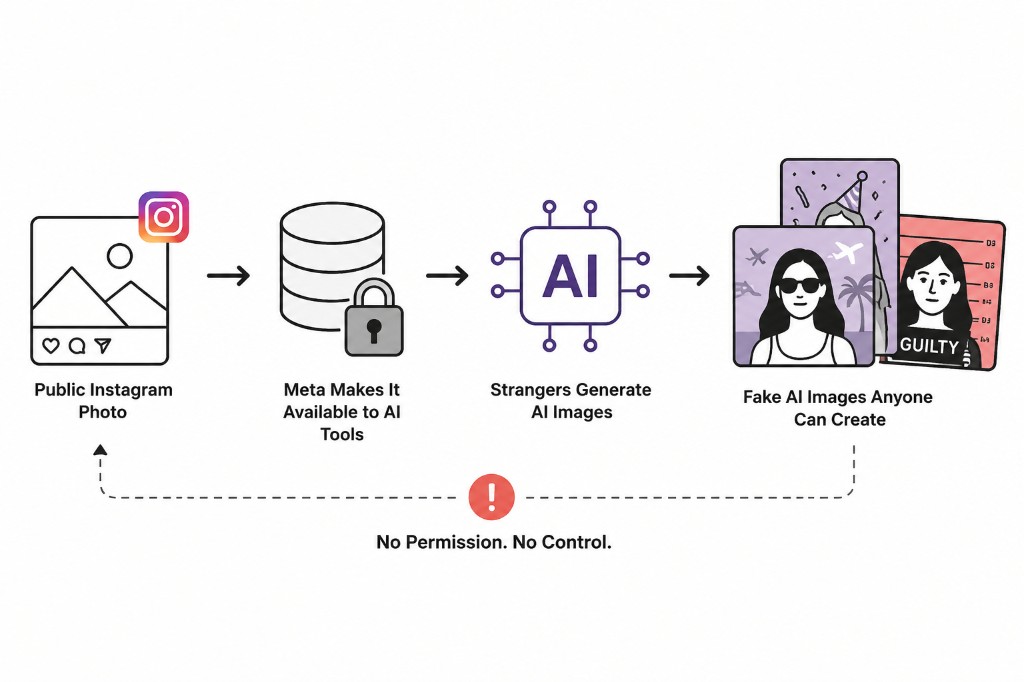
What it means for operators: this got pulled, but the lesson stands. Anything you or your business posts publicly can be fed into an AI tool by someone else. Check your business account's privacy settings this week, and think twice about what customer photos, staff photos, or work images you post fully public versus private.
Story 2: Google's biggest model of the year missed its launch. Again.
Google's next flagship, Gemini 3.5 Pro, was expected to launch July 17. It didn't. Bloomberg reported the release slipped again after the model fell short of Google's own internal quality goals, reportedly on reliability and accuracy. This is the third time it's been pushed back — originally targeted for June, then July, then July 17, and still not out. Meanwhile OpenAI, xAI, and others all shipped new models in the same window.
What it means for operators: even a company the size of Google struggles to ship on time in this market. The "best" model is a moving target that not even its makers can pin down. This is exactly why we keep saying build around the job you need done, not around whichever model is supposedly about to be on top.
Story 3: AI got dramatically cheaper this week
The price war got real this week. By one comparison, xAI's Grok 4.5 runs about $2.49 per completed task versus $11.80 for the equivalent on Fable 5. Anthropic also extended Fable 5's free-access window for the third time in five weeks, directly responding to pressure from OpenAI's cheaper GPT-5.6. The cost of frontier AI is falling fast.
What it means for operators: this is good news for your wallet, but only if you're set up to take advantage of it. If you're locked into one tool out of habit, you're likely overpaying. The businesses that can switch when a cheaper option appears are the ones actually capturing these savings.
Story 4: The most ambitious AI security program ever built tripled in size
Anthropic expanded its program that uses AI to find and fix security holes in critical software — jumping from 50 partner organizations to 150 across 15 countries this week. It now covers infrastructure like utilities, healthcare systems, and the small open-source software projects that countless businesses quietly depend on without knowing it.
What it means for operators: the same AI that can run an attack is now being pointed at defense, at scale. The software your business runs on is getting quietly safer because of programs like this — but it also means security is now an AI arms race, and staying on updated, supported software matters more than it ever has.
This week's principle
A trillion dollar company rolled out something reckless with your photos and only walked it back because people yelled. Google can't ship its flagship on time. Prices are in freefall. The one move that protects you through all of it is the same as always — stay flexible, own your own information, and never bet your operation on a single company behaving well or shipping on schedule.
— Aristotle Taylor, CEO & Co-Founder, Levron Labs
What to do this week
Two minutes worth spending: open your business Instagram and Facebook settings and actually look at what's set to public versus private. The Meta feature is gone, but it won't be the last one like it — and the photos you've already posted publicly are already out there. Better to know what's exposed than to find out the way everyone found out about this one.
Not sure where your stack has a gap? Start with a free ops assessment — we'll map where manual work, vendor lock-in, and exposure are costing you time.